Anarcha Westcott, Lucy, Betsey
Anarcha Westcott, Lucy, Betsey: Enslaved Women and Medical Sadism
Anarcha Westcott, Lucy, Betsey: Enslaved Women and Medical Sadism
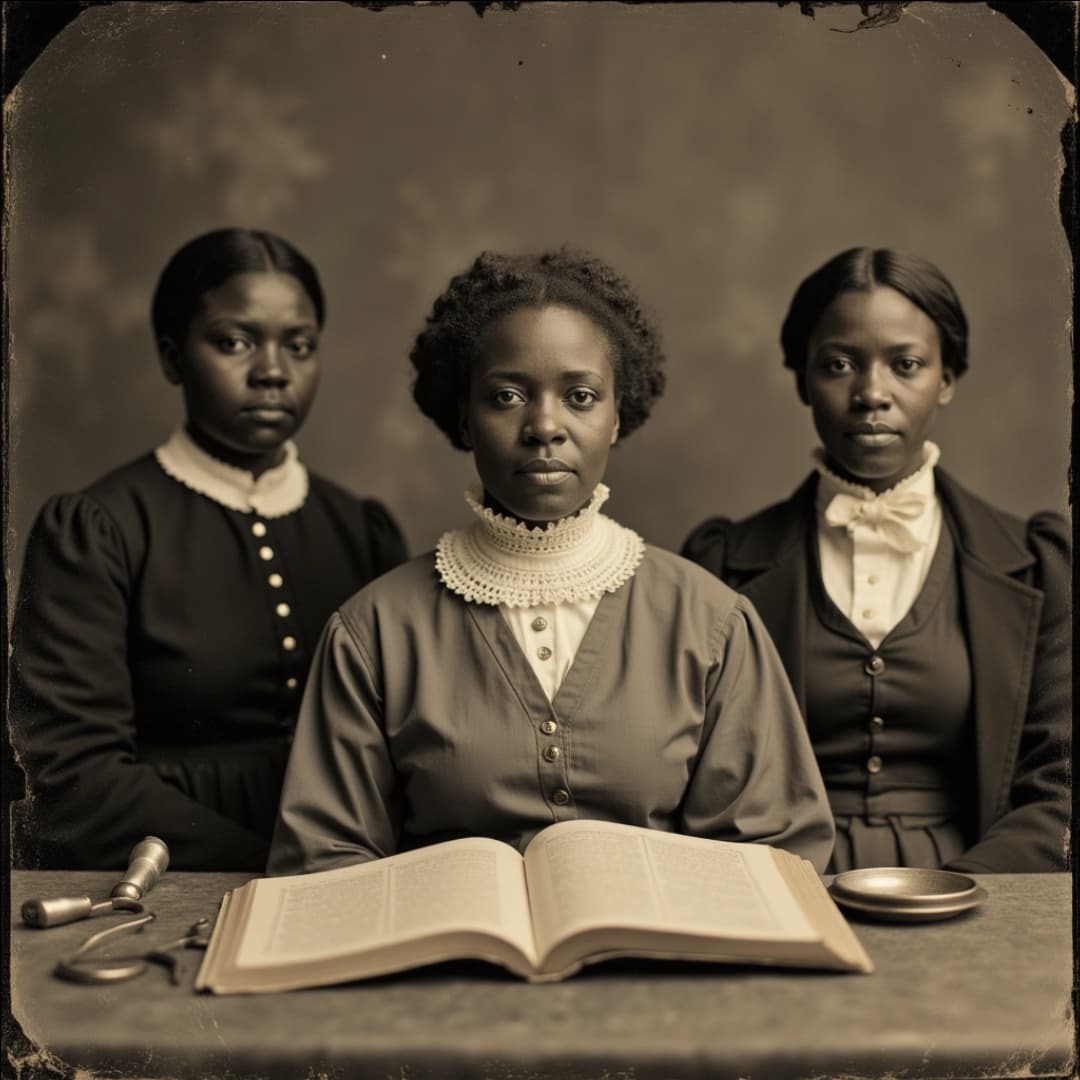
The story of Anarcha, Lucy and Betsey: A case from medical history
Medicine, psychology and ethics
The story of Anarcha, Lucy and Betsey is a significant case in medical history that raises fundamental questions about research ethics, the psychological mechanisms of transgression and the development of modern medical standards. These three enslaved women became test subjects for experimental gynaecological operations in Alabama in the 1840s. While Dr J. Marion Sims gained international recognition as the developer of critical surgical techniques, the women whose bodies were used for these developments remained largely undocumented.
What it's about:
· the historical facts,
· the mechanisms of ethical transgressions,
· the conditions of the experiments,
· the social structures of the case, and
· The justification of the actors.
It is about the psychological processes – dehumanisation, cognitive dissonance, moral rationalisation – that enable people to harm others while maintaining their self-image as ethical individuals systematically.
Who were Anarcha, Lucy and Betsey?
Anarcha, Lucy and Betsey were three enslaved women who served as test subjects for the development of gynaecological surgical techniques between 1845 and 1849. These women suffered from connections between the bladder and vagina and chronic incontinence as complications of difficult births.
Anarcha Westcott was about 17 years old at the time of her first operation. After a difficult birth, she had developed a vesicovaginal fistula. Lucy and Betsey had similar injuries. This complication was statistically more common among enslaved women, as they were denied mainly medical care during pregnancy and had to do physical labour until shortly before giving birth. Dr J. Marion Sims performed experimental operations on them and other enslaved women in Alabama.
Biographical information about these women is limited. In medical records, they appear as "cases" rather than fully documented individuals. Anarcha underwent at least 30 documented operations, while the exact number for Lucy and Betsey is unclear. The procedures were performed without anaesthesia. There are no reliable records of their lives after the experiments. The surgical techniques developed are still used today in modified form.
What happened to these women in Alabama?
In the 1840s, birth complications were statistically common among enslaved women in the southern states. Vesicovaginal fistulas – abnormal connections between the bladder and vagina following difficult births – occurred frequently due to several factors: lack of medical care, physical labour until shortly before birth, malnutrition, and inadequate obstetric care during delivery.
Dr Marion Sims established a practice in Montgomery, Alabama, specialising in the treatment of these fistulas. Anarcha, Lucy and Betsey were subjected to Sims' treatment because their owners hoped to restore their 'labour force' to working capacity.
From an ethical point of view, medical interventions carried out under such conditions violated the basic ethical requirement for medical practice – informed patient consent.
Why did Marion Sims experiment on enslaved women?
Marion Sims saw enslaved women with fistulas as ideal test subjects. They could not refuse; their pain was considered less intense, and he had unlimited access to their bodies without legal or ethical consequences.
The medical rationale was based on the racist pseudoscience of the time. Sims shared the widespread belief that black women had a higher pain tolerance and were physiologically different from white women. This assumption allowed him to operate without anaesthesia, even though ether had been available since 1846, in the middle of his experiments. When Sims later treated wealthy white patients, he used anaesthesia. He never did so with Anarcha, Lucy and Betsey. This belief that black women perceive pain differently was scientifically untenable – but it was convenient for justifying his actions.
Legal factors also played a role. Enslaved people were considered property, not persons. Their owners could grant Sims access to their bodies. Sims was not subject to institutional oversight, ethics committees or legal liability in the event of failure. He could operate as often as necessary to perfect his technique. This combination of racist ideology and legal impunity created the conditions for medical exploitation.
How did Anarcha endure 30 operations without anaesthesia?
Anarcha underwent at least 30 operations between 1845 and 1849 – each without anaesthesia, each painful, each a violation of her physical integrity. The physical reality of this experience is difficult to imagine. She was fully conscious during each operation. She felt every cut, every stitch, every manipulation of her internal organs.
Other enslaved women, including Lucy and Betsey, were forced to hold Anarcha down during the procedures. They watched her in pain. Then, when it was their turn, Anarcha and the others held them down in the same way. This created a traumatic cycle in which the women were forced to participate in each other's torment. Sims documented Anarcha's screams in his notes, but rated her pain as tolerable – again based on the racist assumption that black women would suffer less.
There was little recovery time between operations. As soon as Sims realised that one approach had failed, he tried a new one. Anarcha survived this ordeal, but at what cost? Each operation left new scars – physical and psychological. The trauma of repeated interventions without consent and without pain relief would affect anyone for life.
What role did Lucy and Betsey play in these experiments?
Lucy and Betsey were not only witnesses to Anarcha's suffering – they were victims of the same experiments. While Anarcha is most frequently mentioned in historical records, Lucy and Betsey played an equally important role in the development of surgical techniques.
Like Anarcha, Lucy and Betsey underwent multiple operations without anaesthesia. They endured the same painful procedures. They were held down during the operations by other enslaved women and, in turn, held down others. The three women – Anarcha, Lucy and Betsey – formed an involuntary community of suffering, bound together by the trauma they shared.
Betsey and Lucy appear less frequently in Sims' writings than Anarcha does, so even less is known about their lives. We do not know their ages, their families, or what happened to them after Sims left Alabama. This additional layer of erasure makes their stories even more tragic. If little has been documented about Anarcha, this is even more true for Lucy and Betsey. Nevertheless, their contribution to gynaecological surgery was just as significant. The techniques Sims developed were not perfected on Anarcha alone – they were refined through repeated experiments on all three women. When we talk about the history of gynaecology, we must mention Anarcha, Lucy and Betsey together. To mention only one is to participate in the same erasure that kept their stories hidden for over 150 years.
Why is Marion Sims called the father of modern gynaecology?
Marion Sims was given the title "father of modern gynaecology" in the United States for developing the first successful surgical treatment for vesicovaginal fistulas. He invented the duck speculum, an instrument that is still used in gynaecological examinations today. He developed surgical techniques that became standard worldwide. These contributions to women's health were undoubtedly medical advances.
However, what this title obscures is that Sims developed these techniques through experimental procedures on Anarcha, Lucy, Betsey and other enslaved women without their consent and without anaesthesia. He perfected his methods after repeated failures on the bodies of women who had no right to refuse him. The father of modern gynaecology built his legacy on ethically unacceptable practices.
The medical community has struggled with this uncomfortable truth for decades. Sims, as a pioneer and as someone who caused severe suffering, does not fit into the heroic narrative of medical progress. His contributions helped millions of women avoid suffering – but only after he had inflicted unbearable suffering. In his case, medical progress arose from undeniable moral failure.
Sims achieved fame and fortune through unspeakable suffering.
After perfecting his surgical technique on Anarcha, Lucy and Betsey, Sims left Alabama and moved to New York City, where he turned his experimental work into international fame. In 1855, he opened the Woman's Hospital – the first hospital in America to specialise in women's diseases. There he performed the same fistula repair operations he had developed in Alabama, but with one crucial difference: his new patients were wealthy white women who received anaesthesia, gave informed consent and were treated with dignity.
The success of these operations made Sims famous in the medical world. He travelled to Europe, where he operated on royalty and aristocrats. European medical societies honoured him. He published papers and memoirs that cemented his reputation as a pioneering surgeon. By the end of his career, hospitals bore his name, medical schools taught his techniques, and the medical community celebrated him. His fame and wealth grew steadily as he built an elite practice.
Particularly problematic is how completely Sims sanitised his origin story. In his writings and public presentations, he mentioned Anarcha and the other enslaved women only briefly, if at all. He emphasised his own brilliance and devoted himself to the narrative, while minimising the painful aspects. This narrative served a dual purpose: it protected his reputation and allowed the medical community to celebrate his achievements without addressing the moral issues.
Why were Anarcha, Lucy, and Betsey erased from history?
The erasure of Anarcha, Lucy, and Betsey was no accident—it was a deliberate process that served several purposes. First, acknowledging their stories would have forced an uncomfortable examination of how medical progress was achieved. The medical community preferred a clean narrative: a brilliant doctor makes a breakthrough and saves countless women. Adding the truth – that this doctor used enslaved women for his experiments – would have tarnished that legacy.
Second, the stories of Anarcha, Lucy, and Betsey challenged the racist medical theories that justified their treatment. If the medical community had admitted that these were whole human beings who suffered immensely, it would have undermined the pseudoscientific claims about black women's pain tolerance that had made the experiments possible in the first place.
Thirdly, and perhaps most importantly, remembering Anarcha would have required confronting the fundamental violence of slavery itself. The lives of these three women reflected the brutal reality that enslaved people were treated as property, not as human beings. Their lack of consent and physical autonomy was not a failure of medical ethics – it was how slavery worked. To truly honour the stories of Anarcha, Lucy, and Betsey would mean acknowledging that American medicine was built on the same dehumanising principles as slavery itself. This truth was too uncomfortable for the medical community, so these women disappeared from the official records.
What happened to the statue of Marion Sims?
A bronze statue of Marion Sims stood in New York's Central Park from 1894 to 2018. The monument honoured him as a medical pioneer with an inscription about his contributions to women's health. For over a century, this statue was perceived by the public as an unproblematic tribute to an important doctor.
As the full historical circumstances of his research became more widely known, a controversial discussion developed in the 2000s. Medical historians, bioethicists, and civil society groups argued that the statue presented a one-sided portrayal that obscured the ethical problems with his work. The debate intensified amid broader discussions about historical monuments and their statements on social values.
In April 2018, the New York City Public Design Commission voted to relocate the statue. It was transferred from Central Park to Sims's grave in Brooklyn's Green-Wood Cemetery. The reasoning was not to erase historical facts, but to contextualise them. In a less prominent location with a direct connection to humanity, the statue seemed more appropriate than in a public park. At the same time, proposals were made for memorial projects to commemorate the women on whom the experiments were performed. To date, there is no comparable prominent memorial to Anarcha, Lucy and Betsey. The debate about the statue catalysed a broader discussion of the representation of complex historical figures and of how medical achievements and their ethical costs should be weighed in public memory.
What psychological mechanisms made such experiments possible?
From a psychological and social psychological perspective, the Sims case offers a textbook example of the interaction of several psychological mechanisms that not only enable extreme cruelty but can even justify it in the eyes of the perpetrator.
Dehumanisation: Sims did not regard Anarcha, Lucy and Betsey as fully-fledged persons with equal moral status. This cognitive strategy of dehumanisation – the denial of human characteristics to specific groups – is a well-documented psychological defence mechanism that enables people to exhibit behaviour that would be unthinkable towards their own in-group. The medical "science" of the time provided psychobiological justifications for this exclusion: allegedly thicker skin, less sensitive nerve endings, fundamentally different pain perception in "Negroes". These constructions did not serve the purpose of scientific truth-finding, but rather moral exoneration.
Cognitive dissonance and moral rationalisation: Sims saw himself as a humanitarian doctor and innovative surgeon. At the same time, he deliberately and repeatedly inflicted extreme pain. This cognitive dissonance – the contradiction between self-image ("I am a good doctor") and behaviour ("I cut into screaming, defenceless people without anaesthesia") – had to be resolved. The solution came in the form of several rationalisation strategies: the victims were physiologically different, suffered less, needed treatment anyway, and scientific progress justified the means. Such rationalisations are typical of perpetrators in authoritarian structures.
Systemic racism as a psychological framework: Sims' behaviour must be understood in the context of a society that had systematically internalised racist beliefs. Slavery was not only a legal system, but also a profound psychological one. It required the collective maintenance of the idea that black people were fundamentally different and inferior. Physicians, lawyers, theologians and scientists each provided the legitimisation for their respective fields. In this atmosphere, Sims' behaviour was not deviant – it was conformist. This does not make it any less reprehensible, but it explains why there was no institutional resistance.
Legitimisation of authority and diffusion of responsibility: Sims acted with the approval of enslavers, within the framework of "medical research" at the time and without institutional control. These authority structures diffused responsibility: the enslavers gave "permission", the medical community remained silent, and society accepted it. From research on obedience and conformity (Milgram, Zimbardo), we know that under certain conditions, people are capable of extreme behaviour when it appears legitimised by authority.
Sadism and instrumental violence: Psychologically, Sims' behaviour can be classified less as primarily sadistic (taking pleasure in the suffering of others) and more as instrumental. His goal was medical fame and progress – from his perspective, the suffering of the women was an acceptable "side effect," not his primary motivation. This instrumental cruelty, in which people are viewed as a means to an end, is often more dangerous psychologically than overt sadism because it feels more rational and therefore more acceptable. The perpetrator can maintain his self-image as a moral person: "I am not doing this because I am cruel, but because it is scientifically necessary."
The role of group dynamics: It is also important to note that Sims did not act alone. Other doctors knew about his experiments. Medical colleagues later supported him. The women had to hold each other down, so they were involved in the process. This distribution of roles and peer social confirmation reinforced the normalisation of what was happening. When other authority figures remain silent or agree, deviant behaviour becomes the norm within the group.
These psychological mechanisms explain – without excusing – how one person could torture others while considering himself a benefactor systematically. They also show that such constellations are not limited to the past, but can recur under certain structural and psychological conditions.
What does this story mean for modern medical ethics?
The story of Anarcha, Lucy, and Betsey illustrates fundamental questions of medical ethics that remain relevant today. Modern medical ethics, with its principles of informed consent, patient autonomy, and "primum nil nocere" (first, not harm), developed in part as a direct response to historical excesses such as Sims' experiments.
The origin of modern ethical standards: The Nuremberg Doctors' Trials after the Second World War, the Helsinki Declaration of 1964 and the establishment of ethics committees arose from the realisation that medical research without ethical boundaries can lead to extreme human rights violations. The Anarcha case is one of the historical precedents that show why such institutional controls are necessary.
Persistence of medical disparities: Studies continue to show significant differences in pain treatment: Black patients receive statistically fewer analgesics than white patients for comparable injuries and illnesses. The maternal mortality rate is also significantly higher among Black women. These disparities have complex causes, but historical stereotypes about pain perception have been shown to play a role still.
The importance of institutional control: The case shows why medical research needs transparent approval procedures, independent ethics committees, and respect for patient rights. Without these structures, well-intentioned medical goals can lead to ethical disasters – especially among vulnerable populations without social power.
Conclusion
The story of Anarcha, Lucy and Betsey is an essential chapter in the development of medical ethics. It illustrates how medical progress can arise under ethically problematic conditions and what psychological and social mechanisms enable such developments.
Key historical and psychological insights:
• Historical context: Anarcha, Lucy, and Betsey were enslaved women in Alabama who were used in the 1840s for experimental gynaecological operations that led to the development of modern surgical techniques.
• Medical practice without anaesthesia: The operations were performed without anaesthesia because the medical doctrine of the time mistakenly assumed that black people had a different perception of pain.
• Legal and ethical framework: As enslaved persons, the women had no legal personality and could not legally consent to or refuse medical procedures
• Psychological mechanisms: The case illustrates dehumanisation, cognitive dissonance, moral rationalisation and the role of systemic racism as a psychological framework for medical transgressions
• Career and reputation: Marion Sims later used the techniques he developed to treat wealthy patients using anaesthesia, thereby gaining international recognition
• Documentation gaps: Little is known about the lives of the three women before and after the experiments, which highlights the general problem of the historical invisibility of vulnerable groups
• Emergence of medical ethics standards: Modern medical ethics, with principles such as informed consent and institutional oversight, developed in part as a response to historical cases such as this one
• Controversy over monuments: Sims' statue in New York's Central Park was removed in 2018 after years of debate and relocated to a less prominent location
• Persistent disparities: Current research continues to show significant differences in medical treatment based on ethnicity, highlighting the ongoing relevance of historical stereotypes
• Significance for medical ethics: The case serves as a historical example of the need for transparent ethical standards, independent oversight and the protection of vulnerable population groups in medical research.
RELATED ARTICLES:
Nose surgery for menstrual pain – the forgotten history of the nasogenital theory
Jane Elliott's A Class Divided: Psychology's Most Powerful Prejudice Experiment
Psychology and the invention of fear: The Little Albert experiment
Coffee, control and regicide: Gustav III's unusual coffee experiment.
The story of Anarcha, Lucy and Betsey: A case from medical history
Medicine, psychology and ethics
The story of Anarcha, Lucy and Betsey is a significant case in medical history that raises fundamental questions about research ethics, the psychological mechanisms of transgression and the development of modern medical standards. These three enslaved women became test subjects for experimental gynaecological operations in Alabama in the 1840s. While Dr J. Marion Sims gained international recognition as the developer of critical surgical techniques, the women whose bodies were used for these developments remained largely undocumented.
What it's about:
· the historical facts,
· the mechanisms of ethical transgressions,
· the conditions of the experiments,
· the social structures of the case, and
· The justification of the actors.
It is about the psychological processes – dehumanisation, cognitive dissonance, moral rationalisation – that enable people to harm others while maintaining their self-image as ethical individuals systematically.
Who were Anarcha, Lucy and Betsey?
Anarcha, Lucy and Betsey were three enslaved women who served as test subjects for the development of gynaecological surgical techniques between 1845 and 1849. These women suffered from connections between the bladder and vagina and chronic incontinence as complications of difficult births.
Anarcha Westcott was about 17 years old at the time of her first operation. After a difficult birth, she had developed a vesicovaginal fistula. Lucy and Betsey had similar injuries. This complication was statistically more common among enslaved women, as they were denied mainly medical care during pregnancy and had to do physical labour until shortly before giving birth. Dr J. Marion Sims performed experimental operations on them and other enslaved women in Alabama.
Biographical information about these women is limited. In medical records, they appear as "cases" rather than fully documented individuals. Anarcha underwent at least 30 documented operations, while the exact number for Lucy and Betsey is unclear. The procedures were performed without anaesthesia. There are no reliable records of their lives after the experiments. The surgical techniques developed are still used today in modified form.
What happened to these women in Alabama?
In the 1840s, birth complications were statistically common among enslaved women in the southern states. Vesicovaginal fistulas – abnormal connections between the bladder and vagina following difficult births – occurred frequently due to several factors: lack of medical care, physical labour until shortly before birth, malnutrition, and inadequate obstetric care during delivery.
Dr Marion Sims established a practice in Montgomery, Alabama, specialising in the treatment of these fistulas. Anarcha, Lucy and Betsey were subjected to Sims' treatment because their owners hoped to restore their 'labour force' to working capacity.
From an ethical point of view, medical interventions carried out under such conditions violated the basic ethical requirement for medical practice – informed patient consent.
Why did Marion Sims experiment on enslaved women?
Marion Sims saw enslaved women with fistulas as ideal test subjects. They could not refuse; their pain was considered less intense, and he had unlimited access to their bodies without legal or ethical consequences.
The medical rationale was based on the racist pseudoscience of the time. Sims shared the widespread belief that black women had a higher pain tolerance and were physiologically different from white women. This assumption allowed him to operate without anaesthesia, even though ether had been available since 1846, in the middle of his experiments. When Sims later treated wealthy white patients, he used anaesthesia. He never did so with Anarcha, Lucy and Betsey. This belief that black women perceive pain differently was scientifically untenable – but it was convenient for justifying his actions.
Legal factors also played a role. Enslaved people were considered property, not persons. Their owners could grant Sims access to their bodies. Sims was not subject to institutional oversight, ethics committees or legal liability in the event of failure. He could operate as often as necessary to perfect his technique. This combination of racist ideology and legal impunity created the conditions for medical exploitation.
How did Anarcha endure 30 operations without anaesthesia?
Anarcha underwent at least 30 operations between 1845 and 1849 – each without anaesthesia, each painful, each a violation of her physical integrity. The physical reality of this experience is difficult to imagine. She was fully conscious during each operation. She felt every cut, every stitch, every manipulation of her internal organs.
Other enslaved women, including Lucy and Betsey, were forced to hold Anarcha down during the procedures. They watched her in pain. Then, when it was their turn, Anarcha and the others held them down in the same way. This created a traumatic cycle in which the women were forced to participate in each other's torment. Sims documented Anarcha's screams in his notes, but rated her pain as tolerable – again based on the racist assumption that black women would suffer less.
There was little recovery time between operations. As soon as Sims realised that one approach had failed, he tried a new one. Anarcha survived this ordeal, but at what cost? Each operation left new scars – physical and psychological. The trauma of repeated interventions without consent and without pain relief would affect anyone for life.
What role did Lucy and Betsey play in these experiments?
Lucy and Betsey were not only witnesses to Anarcha's suffering – they were victims of the same experiments. While Anarcha is most frequently mentioned in historical records, Lucy and Betsey played an equally important role in the development of surgical techniques.
Like Anarcha, Lucy and Betsey underwent multiple operations without anaesthesia. They endured the same painful procedures. They were held down during the operations by other enslaved women and, in turn, held down others. The three women – Anarcha, Lucy and Betsey – formed an involuntary community of suffering, bound together by the trauma they shared.
Betsey and Lucy appear less frequently in Sims' writings than Anarcha does, so even less is known about their lives. We do not know their ages, their families, or what happened to them after Sims left Alabama. This additional layer of erasure makes their stories even more tragic. If little has been documented about Anarcha, this is even more true for Lucy and Betsey. Nevertheless, their contribution to gynaecological surgery was just as significant. The techniques Sims developed were not perfected on Anarcha alone – they were refined through repeated experiments on all three women. When we talk about the history of gynaecology, we must mention Anarcha, Lucy and Betsey together. To mention only one is to participate in the same erasure that kept their stories hidden for over 150 years.
Why is Marion Sims called the father of modern gynaecology?
Marion Sims was given the title "father of modern gynaecology" in the United States for developing the first successful surgical treatment for vesicovaginal fistulas. He invented the duck speculum, an instrument that is still used in gynaecological examinations today. He developed surgical techniques that became standard worldwide. These contributions to women's health were undoubtedly medical advances.
However, what this title obscures is that Sims developed these techniques through experimental procedures on Anarcha, Lucy, Betsey and other enslaved women without their consent and without anaesthesia. He perfected his methods after repeated failures on the bodies of women who had no right to refuse him. The father of modern gynaecology built his legacy on ethically unacceptable practices.
The medical community has struggled with this uncomfortable truth for decades. Sims, as a pioneer and as someone who caused severe suffering, does not fit into the heroic narrative of medical progress. His contributions helped millions of women avoid suffering – but only after he had inflicted unbearable suffering. In his case, medical progress arose from undeniable moral failure.
Sims achieved fame and fortune through unspeakable suffering.
After perfecting his surgical technique on Anarcha, Lucy and Betsey, Sims left Alabama and moved to New York City, where he turned his experimental work into international fame. In 1855, he opened the Woman's Hospital – the first hospital in America to specialise in women's diseases. There he performed the same fistula repair operations he had developed in Alabama, but with one crucial difference: his new patients were wealthy white women who received anaesthesia, gave informed consent and were treated with dignity.
The success of these operations made Sims famous in the medical world. He travelled to Europe, where he operated on royalty and aristocrats. European medical societies honoured him. He published papers and memoirs that cemented his reputation as a pioneering surgeon. By the end of his career, hospitals bore his name, medical schools taught his techniques, and the medical community celebrated him. His fame and wealth grew steadily as he built an elite practice.
Particularly problematic is how completely Sims sanitised his origin story. In his writings and public presentations, he mentioned Anarcha and the other enslaved women only briefly, if at all. He emphasised his own brilliance and devoted himself to the narrative, while minimising the painful aspects. This narrative served a dual purpose: it protected his reputation and allowed the medical community to celebrate his achievements without addressing the moral issues.
Why were Anarcha, Lucy, and Betsey erased from history?
The erasure of Anarcha, Lucy, and Betsey was no accident—it was a deliberate process that served several purposes. First, acknowledging their stories would have forced an uncomfortable examination of how medical progress was achieved. The medical community preferred a clean narrative: a brilliant doctor makes a breakthrough and saves countless women. Adding the truth – that this doctor used enslaved women for his experiments – would have tarnished that legacy.
Second, the stories of Anarcha, Lucy, and Betsey challenged the racist medical theories that justified their treatment. If the medical community had admitted that these were whole human beings who suffered immensely, it would have undermined the pseudoscientific claims about black women's pain tolerance that had made the experiments possible in the first place.
Thirdly, and perhaps most importantly, remembering Anarcha would have required confronting the fundamental violence of slavery itself. The lives of these three women reflected the brutal reality that enslaved people were treated as property, not as human beings. Their lack of consent and physical autonomy was not a failure of medical ethics – it was how slavery worked. To truly honour the stories of Anarcha, Lucy, and Betsey would mean acknowledging that American medicine was built on the same dehumanising principles as slavery itself. This truth was too uncomfortable for the medical community, so these women disappeared from the official records.
What happened to the statue of Marion Sims?
A bronze statue of Marion Sims stood in New York's Central Park from 1894 to 2018. The monument honoured him as a medical pioneer with an inscription about his contributions to women's health. For over a century, this statue was perceived by the public as an unproblematic tribute to an important doctor.
As the full historical circumstances of his research became more widely known, a controversial discussion developed in the 2000s. Medical historians, bioethicists, and civil society groups argued that the statue presented a one-sided portrayal that obscured the ethical problems with his work. The debate intensified amid broader discussions about historical monuments and their statements on social values.
In April 2018, the New York City Public Design Commission voted to relocate the statue. It was transferred from Central Park to Sims's grave in Brooklyn's Green-Wood Cemetery. The reasoning was not to erase historical facts, but to contextualise them. In a less prominent location with a direct connection to humanity, the statue seemed more appropriate than in a public park. At the same time, proposals were made for memorial projects to commemorate the women on whom the experiments were performed. To date, there is no comparable prominent memorial to Anarcha, Lucy and Betsey. The debate about the statue catalysed a broader discussion of the representation of complex historical figures and of how medical achievements and their ethical costs should be weighed in public memory.
What psychological mechanisms made such experiments possible?
From a psychological and social psychological perspective, the Sims case offers a textbook example of the interaction of several psychological mechanisms that not only enable extreme cruelty but can even justify it in the eyes of the perpetrator.
Dehumanisation: Sims did not regard Anarcha, Lucy and Betsey as fully-fledged persons with equal moral status. This cognitive strategy of dehumanisation – the denial of human characteristics to specific groups – is a well-documented psychological defence mechanism that enables people to exhibit behaviour that would be unthinkable towards their own in-group. The medical "science" of the time provided psychobiological justifications for this exclusion: allegedly thicker skin, less sensitive nerve endings, fundamentally different pain perception in "Negroes". These constructions did not serve the purpose of scientific truth-finding, but rather moral exoneration.
Cognitive dissonance and moral rationalisation: Sims saw himself as a humanitarian doctor and innovative surgeon. At the same time, he deliberately and repeatedly inflicted extreme pain. This cognitive dissonance – the contradiction between self-image ("I am a good doctor") and behaviour ("I cut into screaming, defenceless people without anaesthesia") – had to be resolved. The solution came in the form of several rationalisation strategies: the victims were physiologically different, suffered less, needed treatment anyway, and scientific progress justified the means. Such rationalisations are typical of perpetrators in authoritarian structures.
Systemic racism as a psychological framework: Sims' behaviour must be understood in the context of a society that had systematically internalised racist beliefs. Slavery was not only a legal system, but also a profound psychological one. It required the collective maintenance of the idea that black people were fundamentally different and inferior. Physicians, lawyers, theologians and scientists each provided the legitimisation for their respective fields. In this atmosphere, Sims' behaviour was not deviant – it was conformist. This does not make it any less reprehensible, but it explains why there was no institutional resistance.
Legitimisation of authority and diffusion of responsibility: Sims acted with the approval of enslavers, within the framework of "medical research" at the time and without institutional control. These authority structures diffused responsibility: the enslavers gave "permission", the medical community remained silent, and society accepted it. From research on obedience and conformity (Milgram, Zimbardo), we know that under certain conditions, people are capable of extreme behaviour when it appears legitimised by authority.
Sadism and instrumental violence: Psychologically, Sims' behaviour can be classified less as primarily sadistic (taking pleasure in the suffering of others) and more as instrumental. His goal was medical fame and progress – from his perspective, the suffering of the women was an acceptable "side effect," not his primary motivation. This instrumental cruelty, in which people are viewed as a means to an end, is often more dangerous psychologically than overt sadism because it feels more rational and therefore more acceptable. The perpetrator can maintain his self-image as a moral person: "I am not doing this because I am cruel, but because it is scientifically necessary."
The role of group dynamics: It is also important to note that Sims did not act alone. Other doctors knew about his experiments. Medical colleagues later supported him. The women had to hold each other down, so they were involved in the process. This distribution of roles and peer social confirmation reinforced the normalisation of what was happening. When other authority figures remain silent or agree, deviant behaviour becomes the norm within the group.
These psychological mechanisms explain – without excusing – how one person could torture others while considering himself a benefactor systematically. They also show that such constellations are not limited to the past, but can recur under certain structural and psychological conditions.
What does this story mean for modern medical ethics?
The story of Anarcha, Lucy, and Betsey illustrates fundamental questions of medical ethics that remain relevant today. Modern medical ethics, with its principles of informed consent, patient autonomy, and "primum nil nocere" (first, not harm), developed in part as a direct response to historical excesses such as Sims' experiments.
The origin of modern ethical standards: The Nuremberg Doctors' Trials after the Second World War, the Helsinki Declaration of 1964 and the establishment of ethics committees arose from the realisation that medical research without ethical boundaries can lead to extreme human rights violations. The Anarcha case is one of the historical precedents that show why such institutional controls are necessary.
Persistence of medical disparities: Studies continue to show significant differences in pain treatment: Black patients receive statistically fewer analgesics than white patients for comparable injuries and illnesses. The maternal mortality rate is also significantly higher among Black women. These disparities have complex causes, but historical stereotypes about pain perception have been shown to play a role still.
The importance of institutional control: The case shows why medical research needs transparent approval procedures, independent ethics committees, and respect for patient rights. Without these structures, well-intentioned medical goals can lead to ethical disasters – especially among vulnerable populations without social power.
Conclusion
The story of Anarcha, Lucy and Betsey is an essential chapter in the development of medical ethics. It illustrates how medical progress can arise under ethically problematic conditions and what psychological and social mechanisms enable such developments.
Key historical and psychological insights:
• Historical context: Anarcha, Lucy, and Betsey were enslaved women in Alabama who were used in the 1840s for experimental gynaecological operations that led to the development of modern surgical techniques.
• Medical practice without anaesthesia: The operations were performed without anaesthesia because the medical doctrine of the time mistakenly assumed that black people had a different perception of pain.
• Legal and ethical framework: As enslaved persons, the women had no legal personality and could not legally consent to or refuse medical procedures
• Psychological mechanisms: The case illustrates dehumanisation, cognitive dissonance, moral rationalisation and the role of systemic racism as a psychological framework for medical transgressions
• Career and reputation: Marion Sims later used the techniques he developed to treat wealthy patients using anaesthesia, thereby gaining international recognition
• Documentation gaps: Little is known about the lives of the three women before and after the experiments, which highlights the general problem of the historical invisibility of vulnerable groups
• Emergence of medical ethics standards: Modern medical ethics, with principles such as informed consent and institutional oversight, developed in part as a response to historical cases such as this one
• Controversy over monuments: Sims' statue in New York's Central Park was removed in 2018 after years of debate and relocated to a less prominent location
• Persistent disparities: Current research continues to show significant differences in medical treatment based on ethnicity, highlighting the ongoing relevance of historical stereotypes
• Significance for medical ethics: The case serves as a historical example of the need for transparent ethical standards, independent oversight and the protection of vulnerable population groups in medical research.
RELATED ARTICLES:
Nose surgery for menstrual pain – the forgotten history of the nasogenital theory
Jane Elliott's A Class Divided: Psychology's Most Powerful Prejudice Experiment
Psychology and the invention of fear: The Little Albert experiment
Coffee, control and regicide: Gustav III's unusual coffee experiment.
Newsletter
Would you like to be notified when I publish a new blog post? Sign up here.
Click "Subscribe for free" if you have read and accepted my privacy policy. You can revoke your consent at any time.
Newsletter
Would you like to be notified when I publish a new blog post? Sign up here.
Click "Subscribe for free" if you have read and accepted my privacy policy. You can revoke your consent at any time.